Skip to content
MoralesGarage Door Repair
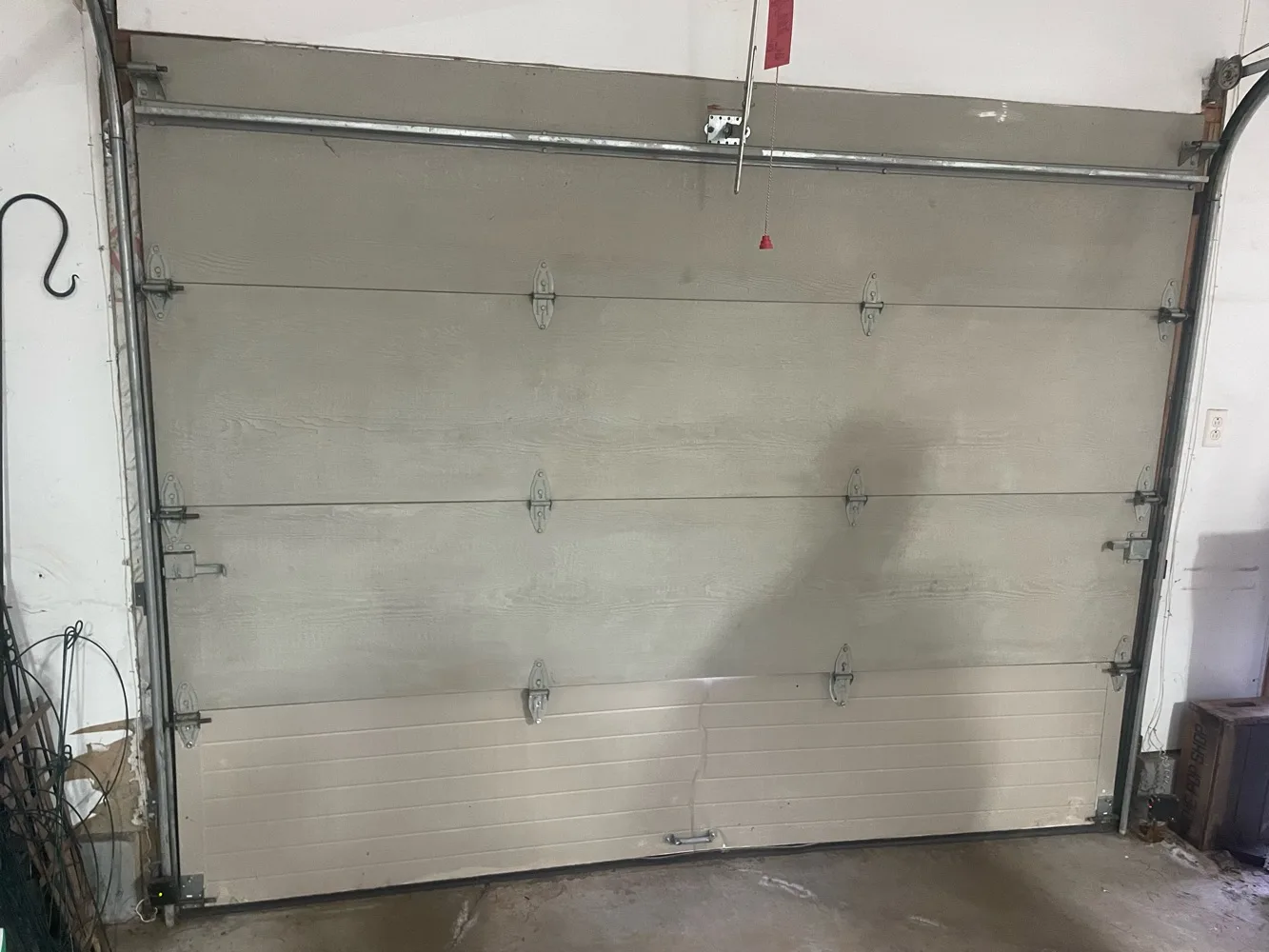
A tall sectional garage door seen closed from inside a garage, its bottom section noticeably newer and lighter than the three weathered sections above it, with hinges and vertical track on both sides.

Services

Springs, openers, cables, tracks, panels and tune-ups

Six kinds of work, all residential, all across Nashua and the towns around it. Below is what each one actually looks like when we turn up.

Start here

Most doors fail in one of six ways

If your symptom is in one of these lists, you already know roughly what we will be quoting for. If it is in none of them, phone anyway — odd faults are usually simple ones once someone has heard the noise described.

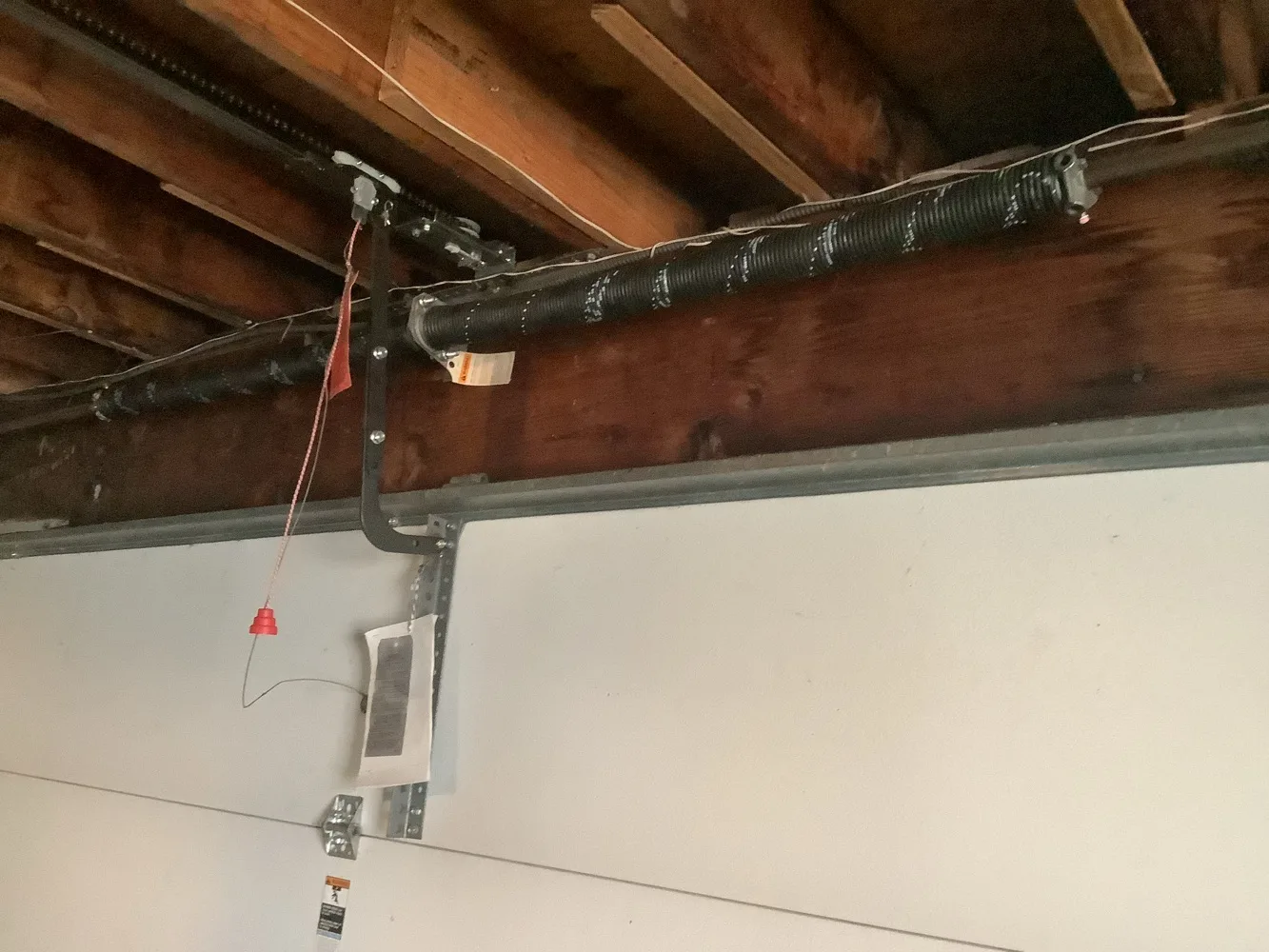
A black torsion spring wound onto its shaft along the header above a garage door, bolted through a centre bearing plate, with the opener rail and its red emergency release cord alongside and rough joists overhead.

Service 01

Torsion and extension spring replacement

The spring carries the weight of the door. When one breaks, the opener is suddenly trying to lift 150 pounds it was never sized for.

What you would notice

  • A bang from the garage overnight, then a door that will not move in the morning
  • A visible two-inch gap in the coil on the shaft above the door
  • The opener strains, the door lifts a few inches and drops back
  • The door feels enormously heavy when you pull the release cord

Cold is what finishes most springs off. Steel loses a little ductility every time it drops below freezing, and a spring that has been cycling for eight or nine years usually gives out on the first hard January morning rather than in July. We wind torsion springs on the shaft with proper bars, never with screwdrivers, and we replace them in pairs even when only one has broken, because the surviving spring has the same cycle count and will follow within months. On older extension-spring doors we fit containment cables at the same time, so a future break cannot throw the spring across the garage.
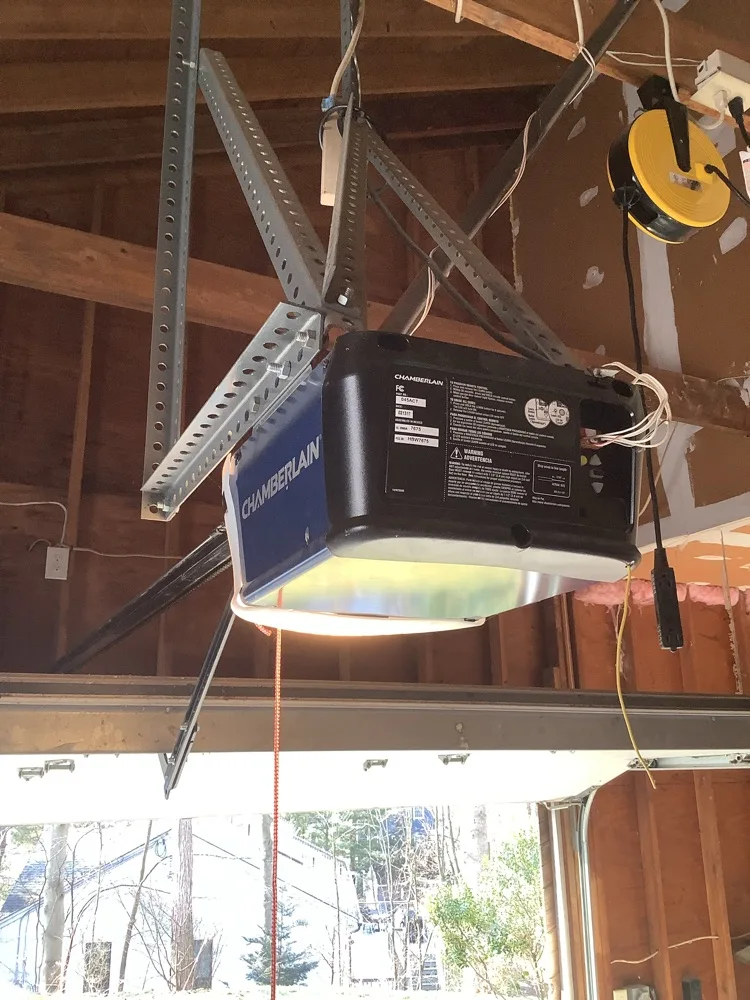
A Chamberlain opener head hung from punched angle-iron under bare joists, its light lens lit and its release cord dangling, with the open bay and leafless woods visible below.

Service 02

Opener repair and installation

Head units, logic boards, travel and force limits, safety sensors, remotes and keypads — repaired where that is honest, replaced where it is not.

What you would notice

  • The door reverses a foot off the floor and the light blinks a count at you
  • The remote works from three feet away and nowhere else
  • A grinding noise at the head unit with no movement at the door
  • The wall button works but the outside keypad has stopped

A great many opener faults are not the opener. Photo-eye brackets get nudged by a snow shovel, sensor lenses fog over in a cold garage, and a door that is binding on frozen tracks trips the force limit exactly as it is designed to. We check the door before we condemn the motor. When a unit genuinely is finished — a stripped drive gear, a dead board on a twenty-year-old chain drive — we say so and quote the replacement, and we set travel and force limits and test the safety reverse on a flat board before we leave.

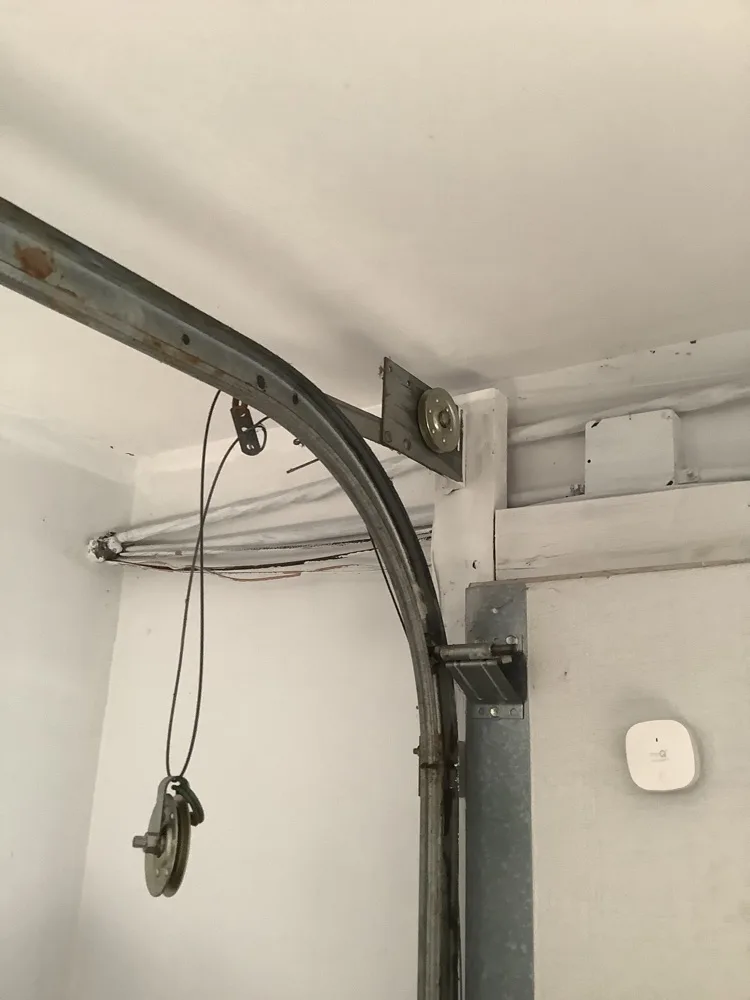
The curved section of a garage door track with its cable bracket at the ceiling, a pulley hanging loose halfway down on slack lift cable instead of sitting under tension.

Service 03

Cable and drum repair

The lift cables translate spring tension into a door that rises level. When one frays or jumps its drum, the door goes crooked fast.

What you would notice

  • One side of the door sits an inch or two lower than the other
  • Loose cable coiled beside the vertical track
  • A rasping noise from one corner as the door travels
  • Rust and broken strands on the cable near the bottom bracket

Road salt is the enemy here. Salt-laden slush comes off the car, sits in the corners of the garage floor, and works on the bottom foot of both cables and the bottom brackets they anchor to. Cables usually fail within a few feet of the floor for exactly that reason. We replace cables in pairs, check the drums for grooving, reset both to the same tension so the door lifts square, and check the bottom brackets, which are under full spring load and are never adjusted with the door up.

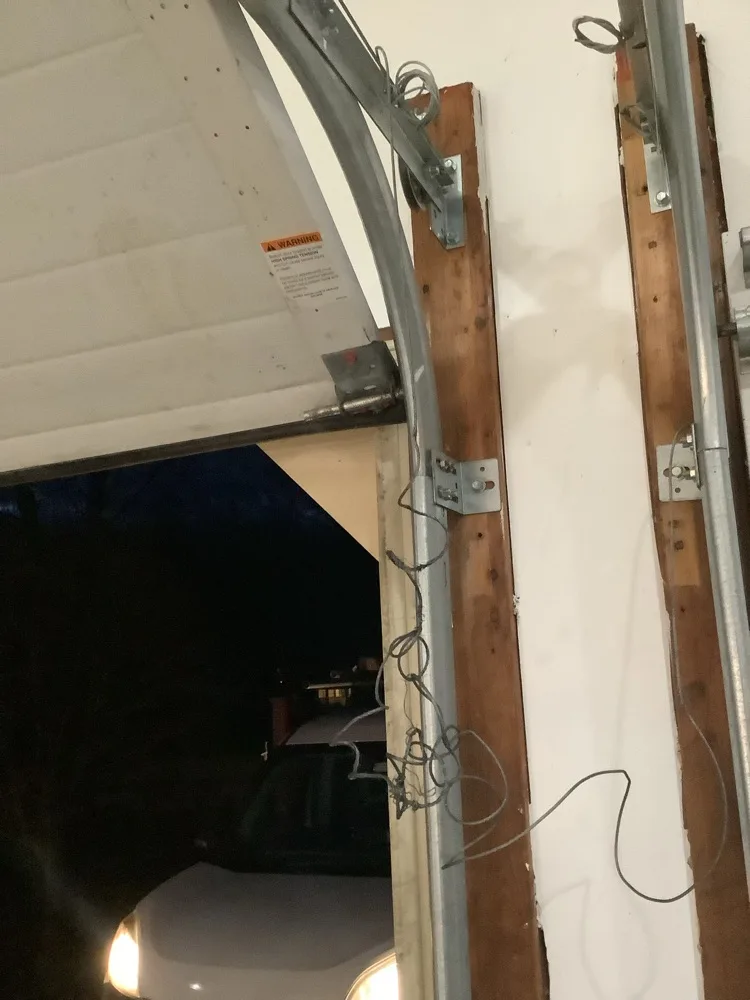
A garage door raised onto its curved track at night, with lift cable tangled in loose loops against the timber jamb and a car with its headlights on standing in the drive outside.

Service 04

Off-track door realignment

A door that has jumped its track is holding several hundred pounds in a position nothing was designed for. It is worth leaving alone until someone is there.

What you would notice

  • The door is jammed at an angle and will not go either way
  • Rollers sitting outside the track, or a track bent open at the curve
  • It happened right after a vehicle or a snowblower touched the door
  • A section is creased where the track let go

The common causes here are a bump from a bumper, a broken cable letting one side run away, and a door that froze to the slab and was then driven up by the opener anyway. That last one is a New Hampshire speciality: a quarter inch of ice at the bottom seal is enough to hold the door while the opener pulls the top section forward. We lower the door safely, straighten or replace the affected track, put the rollers back and check the door for creased sections and racked hinges before we call it fixed.

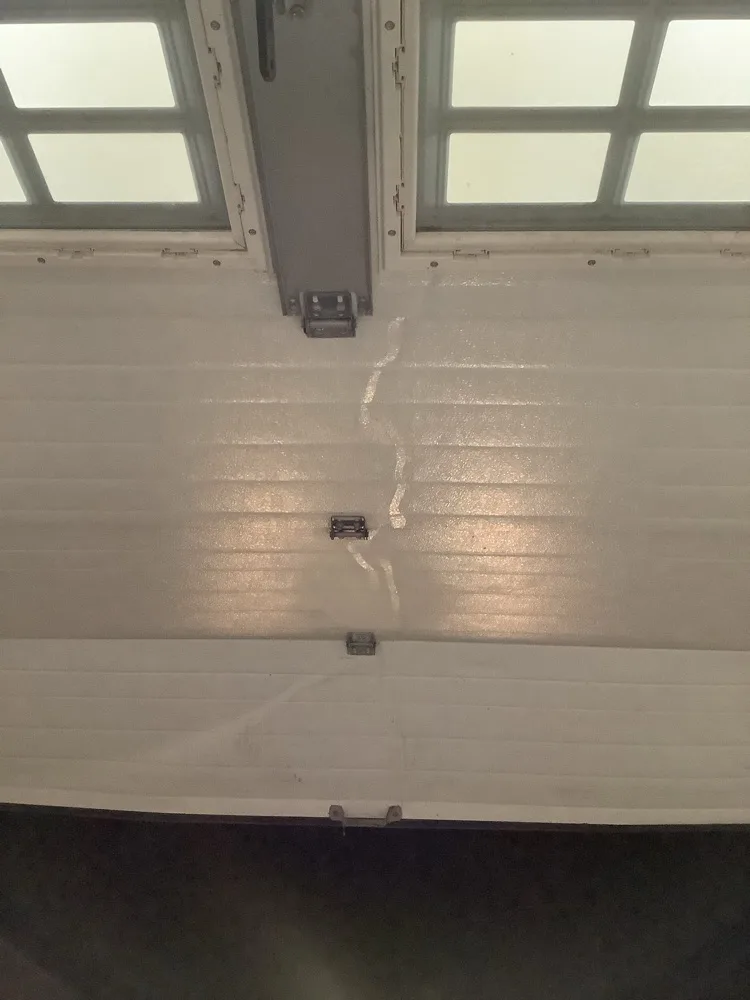
The upper sections of a white garage door seen from inside, a pale crease running down through two panels below the row of window lites where the door has been buckled.

Service 05

Panel and section replacement

One damaged section rarely means a whole new door. Where the model is still made, we replace the section and match the finish.

What you would notice

  • A dented or split bottom section after a backing accident
  • Rot or delamination on an older wood door, usually along the bottom rail
  • A cracked section around a hinge, from a door that was run while binding
  • Daylight and blown snow around a bottom seal that no longer meets the slab

We will tell you honestly which way the arithmetic falls. On a door under about twelve years old with a section still in production, replacing one panel is much the cheaper answer, and we will source it and match the paint. On a door where two or more sections are gone, or where the model was discontinued, a new insulated door usually costs less than chasing parts — and on an attached New Hampshire garage an insulated door with a good bottom seal pays back a fair share of the difference over a winter.

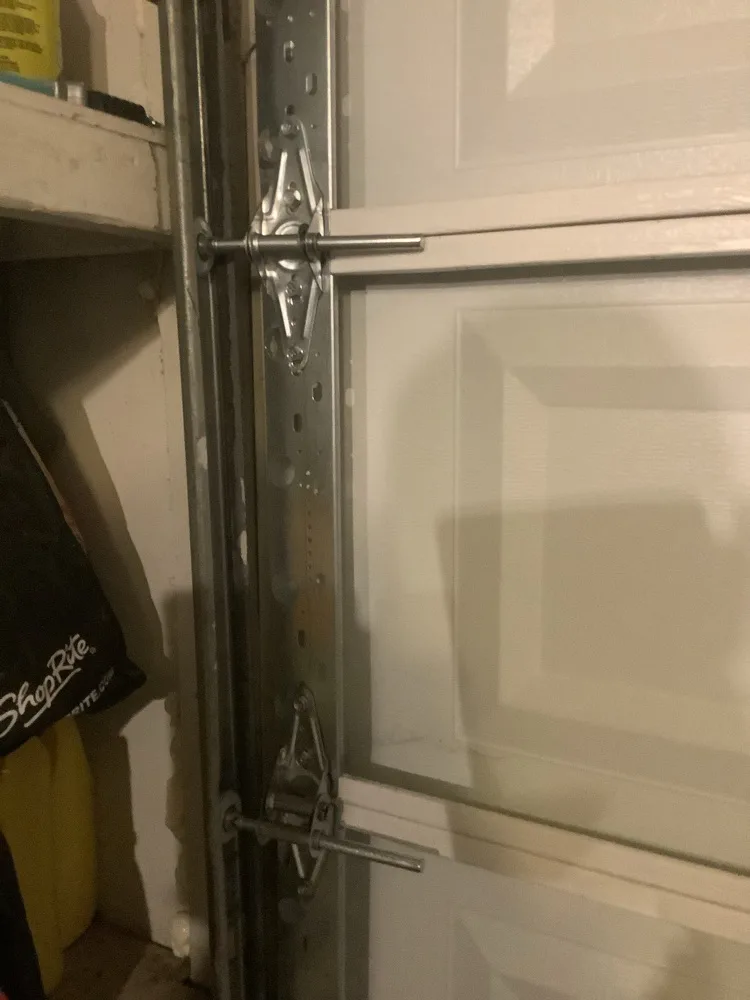
The vertical track of a garage door photographed from inside, two hinges and their roller stems bolted through the sections and seated in the track, with garage shelving to one side.

Service 06

Seasonal tune-ups

An hour in October is the cheapest garage door work there is. Most of what we get called out for in January announces itself in the autumn.

What you would notice

  • The door has got noticeably louder or shakier over the last year
  • It has never been serviced and it is coming up on ten years old
  • It shudders on the way up, or hesitates part way
  • You want it checked before the first freeze

A tune-up is a proper look at the whole assembly: spring balance tested with the opener disconnected, hinges and rollers checked and replaced where the bearings are shot, track bolts and lag screws tightened, cables and drums inspected, bottom seal checked for the gaps that let blown snow in, safety reverse and photo eyes tested, and everything lubricated with a proper garage door lubricant rather than the household spray that washes off and collects grit. We also clear the salt residue off the bottom brackets, which is the single thing that most extends cable life around here.

Questions

Things we get asked most weeks

Short, honest answers. If yours is not here, it is a two-minute phone call.

My door will not open on a freezing morning. Is the opener broken?

Usually not. The most common cause in January is that the bottom seal has frozen to the slab, and the opener is pulling against ice rather than a stuck motor. Do not keep pressing the button — that is how a bottom section gets creased or a door comes off its track. Pull the release cord, break the seal free by hand if you can, and clear the slush line at the threshold. If the door still will not lift by hand, the spring is the next suspect and it is worth a call.

Can I replace a broken torsion spring myself?

We would rather you did not. A torsion spring on a double door stores enough energy to break a wrist or worse if it unwinds off the bar, and the winding bars, the correct wire size and inside diameter, and a solid ladder are the minimum. It is also the one repair where getting the spring specification slightly wrong quietly shortens the life of everything else on the door. If you want to know what we would fit and why, ask us on the phone and we will tell you.

How long does a garage door spring last in New Hampshire?

Springs are rated in cycles, not years — a standard spring is about 10,000 cycles, and one open-and-close is one cycle. A household that comes and goes four times a day gets somewhere around seven years out of that. Cold weather does not change the cycle count, but it does decide when the failure shows up: a spring near the end of its life will nearly always let go on a very cold morning rather than a mild one. If the garage is your main way in and out, ask us about high-cycle springs when we quote.

Do you work in Hudson, Merrimack, Amherst, Milford and Hollis, or only Nashua?

All of them. We are based at 22 Northwest Blvd in Nashua and cover Nashua, Hudson, Merrimack, Amherst, Milford and Hollis as our regular area. If you are elsewhere in Hillsborough County, call and ask — we will tell you straight away whether we can get to you, rather than take the booking and cancel later.

Is an insulated door worth it on an attached garage?

On an attached garage with a room above it or a door into the house, yes, more often than not. An insulated sectional door with an intact bottom seal and decent perimeter weatherstripping keeps the garage far warmer than an uninsulated one on a cold night, which matters for anything stored out there and for the floor above. On a detached garage used for storage it is much less compelling, and we will say so rather than sell it to you.

How do you price the work?

We diagnose the door first, then quote a price for the whole job before anything comes apart, and that price includes the parts, the labour and taking the old hardware away. If we open the door up and find something we did not expect, we stop and tell you what it changes before we carry on. We do not quote spring replacement over the phone without knowing the door — the wire size and the drum matter, and a number given blind is a number that gets revised in your driveway.

Book the work, or just get a straight answer

Tell us the make of opener if you know it, roughly how old the door is, and what it is doing. That is usually enough for us to quote.

Monday to Sunday, 6:00 AM to 10:00 PM

Call (603) 709-6638